

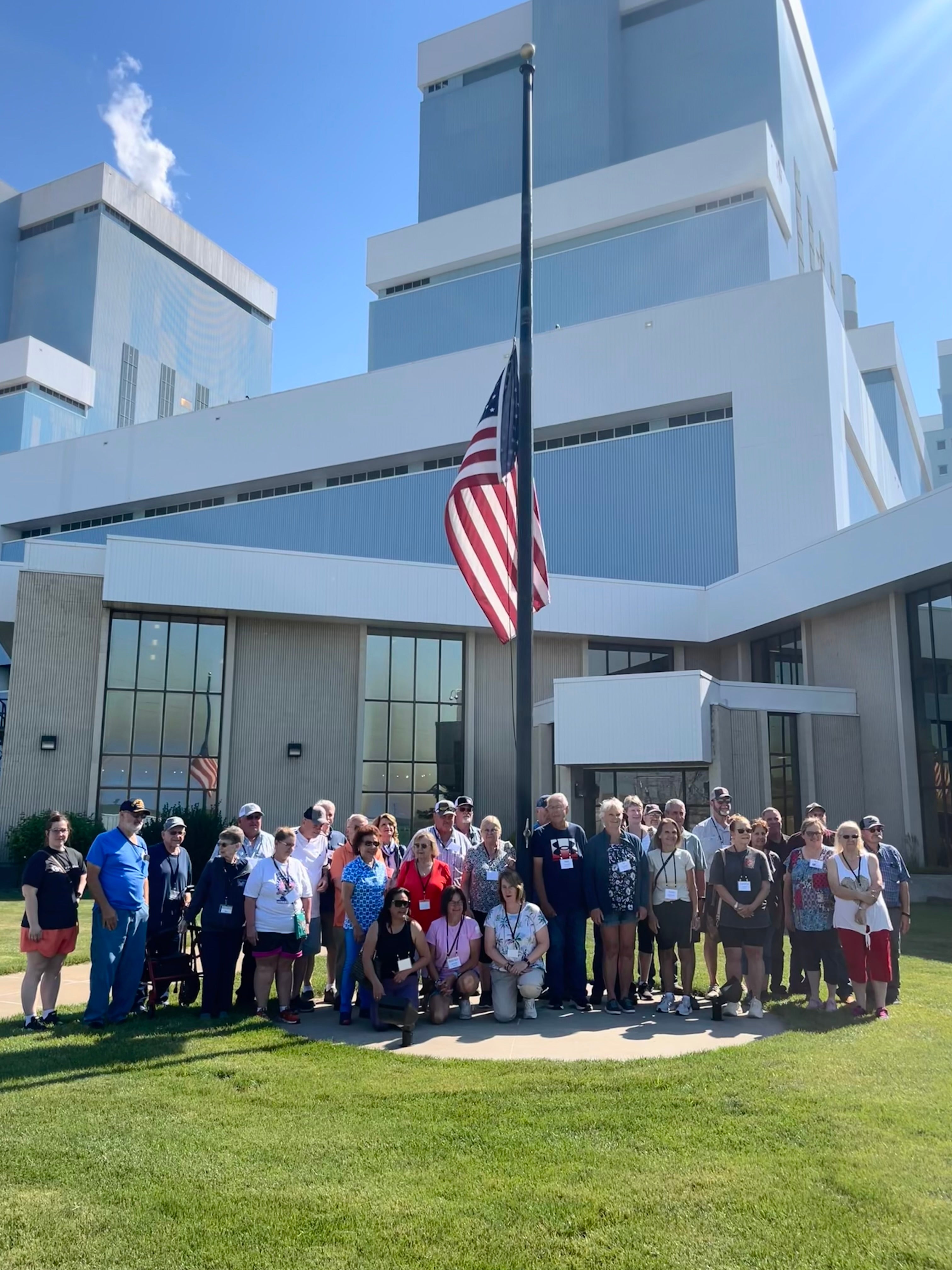
Twelve members got an up-close look at where their energy is produced on Northern Electric’s VIP Tour. The two-day trip is a way to educate members on our cooperative tiers and how the electricity they use every day is actually produced. Northern Electric partnered with FEM Electric in Ipswich and Lake Region Electric in Webster to share a bus and reduce costs. All three cooperatives are fed by the same transmission cooperative, East River Electric, and generation cooperative, Basin Electric Power.
“We saw a lot in two days,” NEC member Vicki Eimers said, “It’s a trip well worth taking. It’s very informational.”
On the first day, members were picked up early in the morning in order to reach Basin Electric’s headquarters in Bismarck, ND for a quick lunch. The tour kicked off with a walk-through of headquarters and the various departments that have the most impact on members, such as the call center, asset management, and marketing teams.
NEC member Gary Nielsen enjoyed the tour of Basin headquarters because it gave him a better understanding of the generation operations. Basin is owned by 138 member cooperatives and serves three million member-owners across nine states. The majority of Northern’s energy is produced by Basin.
“I was surprised by the number of subsidiaries Basin controls or owns. They are a lot larger than I thought they were,” Gary said.
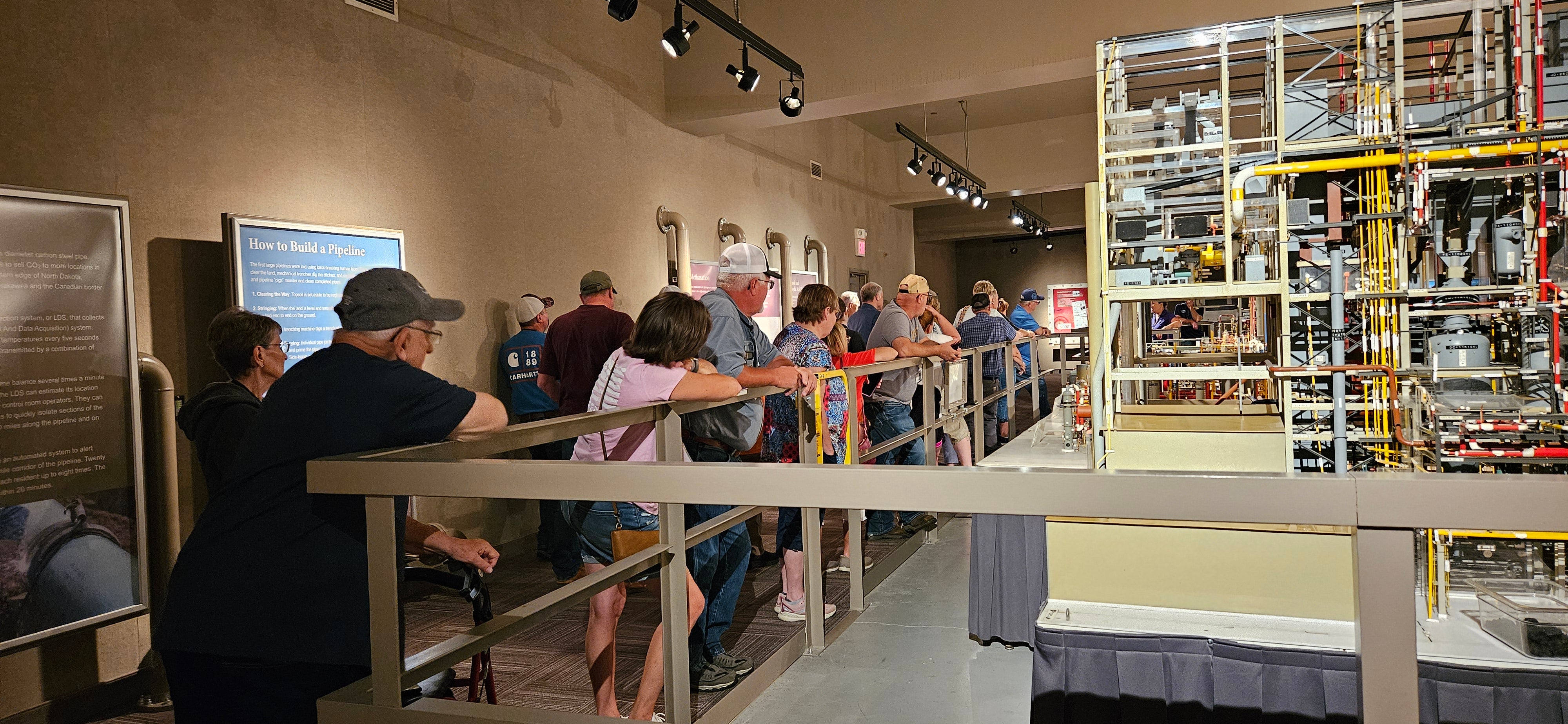
The second day of the tour included an in-depth look at the three intertwined facilities, on the same campus, owned by Basin Electric: Antelope Valley Station (AVS), Dakota Gasification Company (DGC), and Freedom Coal Mine. Both AVS and DGC use coal from the lignite mine. AVS burns the coal to produce electricity. DGC synthesizes the coal into natural gas, which is then sold along with the many byproducts from the process, such as urea, anhydrous ammonia, liquid nitrogen, and xenon gas.
For Vicki, the highlight was the Dakota Gasification Plant. She was amazed by the quantity of byproducts and range of uses. Farming, construction and other power generation processes, including fracking, are just a few of the ways the byproducts are used.
Most members were surprised by the scale. Not only the actual size of the plants and equipment, but also at the energy output. Antelope Valley has two units, each rated at 450 megawatts, for a total of 900-megawatt baseload. DGC can produce 170 million cubic feet of gas per day.
At Antelope Valley Station members had the option to see the fireball from the 17th floor. Since it is literally a multi-story furnace, the upper floors are always around 120 degrees Fahrenheit. On the tour day, it was closer to 130 degrees. Those who wanted to endure the heat spent around 20 minutes on the upper floors, including the top floor, where the whole campus was visible.
“Awful hot. The view was fantastic,” Gary said. “If you get the opportunity, you should definitely go.”
Two of the members had been to Antelope Valley Station before, although it has been several decades. Donn Kuhfeld worked on the electrical system when Antelope Valley Station was being built, and Gary had been on a similar tour. Gary said AVS was hot back then, too!